
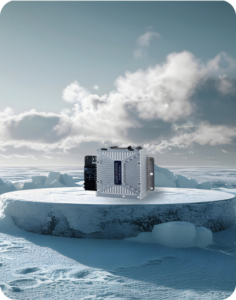





With every newly installed smart meter, not only does grid transparency increase, but so does the underlying communications infrastructure that must be operated securely, reliably and cost-effectively for many years.
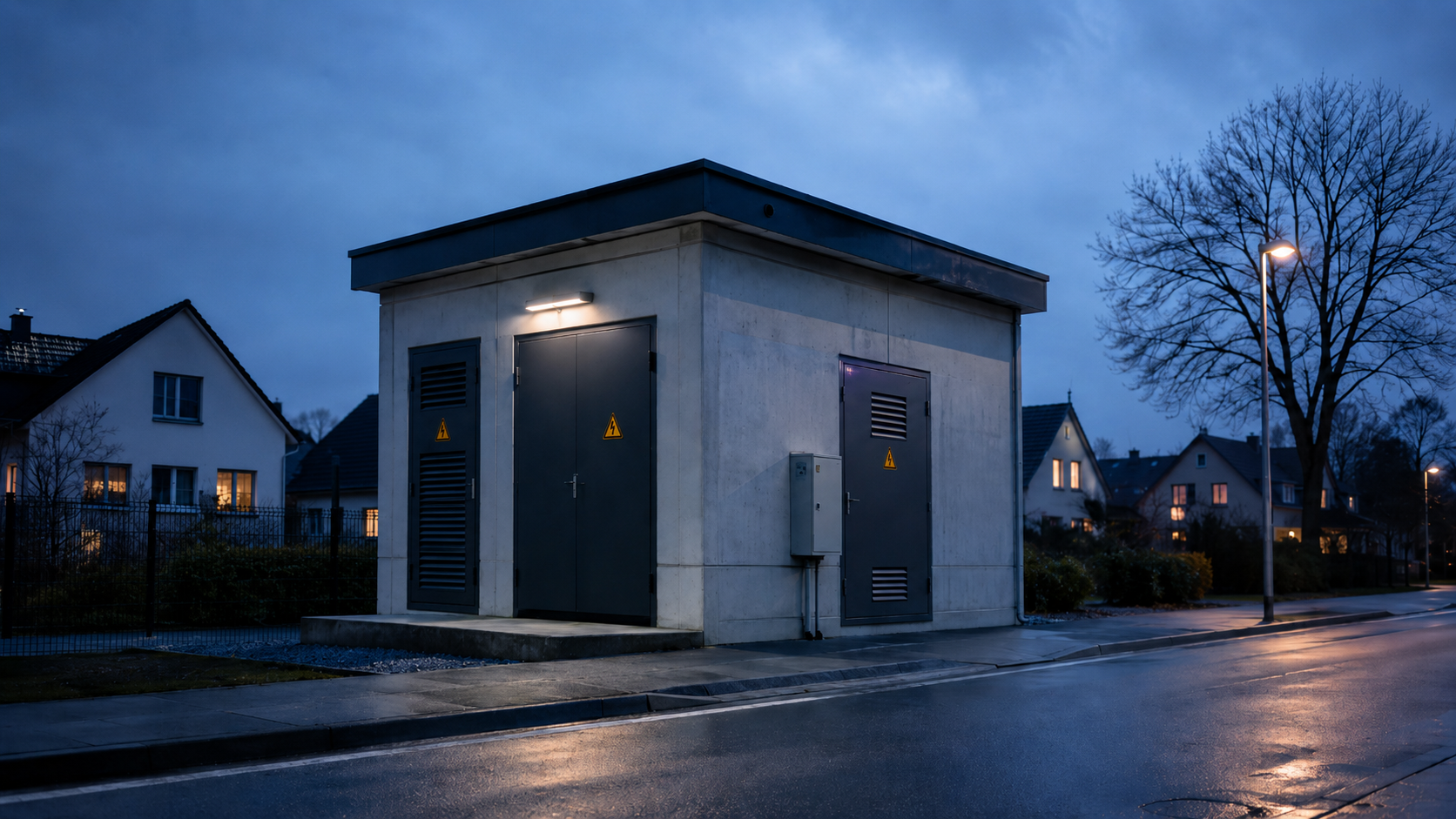
Hardened routers in secondary substations are a central component in this architecture. They connect BPL concentrators to the network operator’s smart metering backend systems and ensure that consumption data is transmitted reliably and securely. BPL stands for Broadband Powerline and enables secure, broadband transmission of IP data traffic over the power lines between households and the secondary substation.
The challenge: thousands of communications nodes need to be configured, monitored, updated and secured. At the same time, requirements for security, availability and the long-term viability of the network architecture continue to increase.
A high-performance router infrastructure therefore becomes a key prerequisite for a successful smart meter rollout.

Secure WAN connectivity for BPL concentrators

Central management of large router fleets

Long-term operational reliability for smart metering infrastructures

Challenges
- Scalable operation of large smart metering infrastructures: Configuration, monitoring, firmware management and fault analysis must remain manageable across thousands of sites.
- Separation of management and user data traffic: In addition to smart meter data, management data is required for operating, maintaining and monitoring the infrastructure. These two data streams have different requirements in terms of prioritisation, availability and security.
- Security and compliance requirements: Smart metering infrastructures transport sensitive consumption data and are subject to strict regulatory requirements. At the same time, communications components must be operated securely and kept up to date over many years.
- Future-proof communications infrastructure: Smart meter rollouts are long-term investments. Network operators need communications solutions that can also support future requirements for scalability, addressing, security and network architectures.

Solution
- Central management of large communications infrastructures: Industrial routers can be configured, monitored and updated centrally. This allows large router fleets to be operated efficiently, without having to manage each site individually.
- Prioritisation of critical communications paths: Quality of Service mechanisms, separate communications channels and network segmentation allow management traffic and smart meter data to be prioritised in a targeted way.
- Secure communication throughout the entire lifecycle: Encrypted management access, secure certificate management and regular security updates support the long-term secure operation of the infrastructure.
- Support for modern network architectures: Industrial routers support modern networking concepts and provide the foundation for the long-term expansion of large smart metering infrastructures.
Benefits for Operators
Scalable operation of large smart metering infrastructures
- Router configurations, software versions and operating parameters can be managed centrally. This keeps the communications infrastructure manageable, even across thousands of communications nodes.
- KPI benefits: lower operating effort per site; fewer on-site service visits; more efficient management of large router fleets
Greater operational reliability through prioritised data streams
- The separation of management and user data traffic ensures that operating and maintenance functions remain reliably available, even in complex smart metering infrastructures.
- KPI benefits: higher availability of critical communications paths; more stable operating processes; faster fault diagnosis
Future-proofing for long-term infrastructure projects
- Smart meter rollouts are planned and operated over many years. Modern network architectures and router platforms with long-term availability reduce future migration and replacement effort.
- KPI benefits: longer investment cycles; lower replacement costs; greater planning certainty
Faster commissioning of large rollouts
- Preconfigured routers as well as automatic network and APN selection simplify the integration of new sites and reduce manual installation effort.
- KPI benefits: shorter installation times; fewer configuration errors; faster rollout of new sites
Technical Insight
- IPv6 support including prefix delegation, DHCPv6 and SLAAC for large distributed router fleets. This allows the BPL concentrators behind the router to receive their own IPv6 address
- LTE and LTE-450 connectivity for WAN access from the secondary substation
- Segmentation of management and user data traffic through separate APNs and VLANs
- Central management of router configuration and firmware via the Garderos Configuration Server (GCS)
- Automatic network and APN selection for different LTE networks
- Secure router administration via HTTPS, SSH, Syslog and SNMP
- Ongoing software and security updates for the long-term operation of distributed routers
Why Garderos
15+ year product lifecycle
The long-term availability of hardware and software reduces replacement cycles and gives network operators greater planning certainty.
Experience with critical energy infrastructures
Garderos routers have been used in energy, smart grid and critical infrastructure applications for many years. The products are designed for the requirements of distributed infrastructures and long-term operating cycles.
Support for customer-specific requirements
Smart metering projects often differ in their architecture, network design and operating model. Garderos supports customers with integration, commissioning and the implementation of project-specific requirements.
From router to operating platform
With the Garderos Configuration Server (GCS), customers get more than just a router: they get a central platform for managing configuration and firmware.
Our Clients








Further Information
Which Garderos router series are best suited for this use case?
What software capabilities does Garderos provide?