


Contact

Utilities

Mobile Emergency Communication for Utilities

Talk to us

When communication infrastructure fails, grid operations become a challenge. Faults, natural events or large-scale outages can lead to communication networks being overloaded or unavailable. At the same time, the need for coordination between control centres and field teams increases.

Mobile emergency communication solutions in the form of portable case systems provide a remedy. They enable rapid, temporary connectivity – independent of existing infrastructure – ensuring that utilities remain operational even in critical situations.

The effectiveness of mobile emergency communication for utilities depends heavily on the underlying networking technology. At the core of every system is the router, acting as the communication interface between field operations and the control centre. It determines whether connections remain stable, secure and continuously available under demanding conditions.

Icon

Mobile emergeny solutions ensure a stable connection in the event of a crisis – with the router at the heart of the system.

Icon

Multi-network connectivity and standard devices instead of expensive, inflexible handheld systems.

Icon

IP-based communication enables efficient operations in the field.

Icon

Challenges

  • Limited and delayed operational readiness in the field: Field teams often lack access to central systems, data or control functions. At the same time, solutions must be deployed rapidly. Complex setups and missing connectivity delay coordination and hinder time-critical decisions.
  • Failure of communication networks: In critical situations, communication networks may become overloaded or completely unavailable, disrupting coordination between control centres and field teams.
  • Dependence on single communication networks: Relying on a single connection creates a single point of failure. If that network fails, communication breaks down entirely.
  • Dependence on proprietary handheld systems: Digital radio solutions often rely on specialised push-to-talk devices, typically provided by a limited number of vendors.
  • High security requirements: The transmission of sensitive operational data requires secure and tamper-proof communication.
  • Harsh environmental conditions: Mobile emergency communication systems are frequently deployed in demanding environments, including extreme temperatures, moisture and mechanical stress.
Icon

Solution

  • Independent mobile emergency communication in critical situations: By combining LTE 450 and Wi-Fi, with optional support for standard LTE or satellite communication, multiple communication paths are available.
  • Reliable connectivity and rapid deployment: The router enables stable communication between the field and the control centre, while preconfigured systems and flexible interfaces allow for fast setup.
  • Reduced dependence on individual networks: Supporting multiple communication technologies increases resilience and minimises reliance on a single network.
  • Use of standard end devices via Wi-Fi: Commercial off-the-shelf devices such as smartphones, tablets and laptops can be integrated directly.
  • Secure and energy-efficient data transmission: Support for established security mechanisms combined with low power consumption makes the solution suitable for battery-powered deployments.
  • Rugged design for mobile deployment: Industrial-grade routers with extended temperature ranges, wide input voltage support and vehicle certification ensure reliable operation under harsh conditions.

Benefits for Utilities


Icon

Cost advantages by avoiding specialised hardware

  • Using standard end devices reduces dependence on expensive, proprietary communication equipment.
  • KPI benefits: lower acquisition costs; reduced spare part costs; improved scalability
Icon

Future-proof mobile communication infrastructure

  • The solution is based on widely adopted technologies such as mobile networks and Wi-Fi.
  • KPI benefits: lower obsolescence risk; higher investment security; reduced replacement cycles
Icon

Fast and coordinated field operations

  • Immediate, stable connectivity allows field teams to access central systems and coordinate efficiently with the control centre, even under time pressure.
  • KPI benefits: faster response times; quicker decision-making; improved operational efficiency
Icon

More than voice communication

  • IP-based mobile emergency communication enables not only voice but also data exchange and application access.
  • KPI benefits: more efficient workflows; better decision-making; improved data availability
Notfallkommunikation KRITIS (Symbolbild)

Technical Insight

  • Reliable operation under extreme conditions such as temperature fluctuations, vibration and mechanical stress.
  • LTE 450, 5G RedCap and an Ethernet-based LEO satellite uplink — such as Eutelsat OneWeb, Starlink or Amazon Kuiper — can be operated in parallel, with instant failover between communication paths.
  • Low power consumption — typically between approximately 4 and 18 watts, depending on configuration — enables battery-powered and off-grid deployments.
  • Model-dependent input voltage ranges of 12–24 VDC, 12–30 VDC or 12–60 VDC support standard DC supplies, vehicle electrical systems and industrial battery setups.
  • Multiple VPN options — including IPsec, OpenVPN and WireGuard — configurable in line with BSI TR-02102-3, combined with TACACS+ and RADIUS for centralised authentication.

Why Garderos

Long-term investment security:

Product lifecycles of at least 15 years and long-term availability reduce the need for costly replacement cycles.

Security architecture for critical infrastructure

VPN, firewall and certificate-based authentication aligned with BSI and NIS2 requirements.

High availability for blackout and fault scenarios

450 MHz, watchdog mechanisms, multi-WAN and self-healing features ensure communication continuity even under extreme conditions.

Reliable under harsh operating conditions

Robust, industrial-grade design for mobile deployment — developed for changing environments, transport and field operation.

Are you facing a similar challenge?

Let’s discuss your use case.

Talk to us

Our Clients

Logo Charge Here

Further Information

What routers does Garderos offer? What software capabilities does Garderos provide?

Utilities

Highly available communications infrastructure for the smart grid

Talk to us

Energy suppliers and distribution network operators are under immense pressure to transform: local substations must be digitised across the board and an increasing number of components connected, the number of distributed generators is growing rapidly, and new regulatory requirements are heightening the need for transparency and grid stability. At the same time, there is a shortage of skilled personnel – projects are taking longer, and maintenance is becoming more complex and expensive.

The key challenge: a stable, highly available and blackout-proof communications infrastructure that continues to function reliably even under difficult conditions.

In this situation, the router becomes the core component: it connects sensors, control systems and the control centre, enables automation and provides the secure communication infrastructure that is essential for modern network management.

Icon

Highly available & blackout-proof communication foundation

Icon

Centralised management, even across multiple sites

Icon

Future-proof technology & availability

Icon

Challenges

  • Modernisation of secondary substations:
    High costs for physical RTUs, outdated legacy equipment, and a growing number of sensors and components that need to be connected.
  • Shortage of skilled professionals:
    A lack of technical specialists delays rollouts, increases manual effort, and complicates maintenance and field configuration.
  • Blackout-resilient communication:
    Redundant alternatives such as cellular or fibre must ensure reliable connectivity despite changing conditions.
  • Rising cyber risks and regulatory pressure:
    The growing number of connected components increases the attack surface, while compliance with requirements is mandatory. At the same time, grid transparency is becoming more important due to rising bidirectional energy flows.
  • Increasingly complex network and device management:
    More devices, data points and components make centralised monitoring and standardised logging indispensable.
Icon

Solution

  • Virtualised RTU functions and sensor integration:
    A router with RTU virtualisation and direct sensor connectivity reduces hardware costs, extends the lifetime of legacy equipment, and enables cost-efficient modernisation of secondary substations in both new build and retrofit scenarios.
  • Automated rollout and centralised management:
    Zero-touch deployment, central configuration and remote diagnostics reduce personnel requirements and accelerate projects despite the shortage of skilled professionals.
  • Multi-WAN concepts:
    Fallback architectures using LTE/5G, fibre and VPN ensure reliable communication.
  • Security architecture:
    Encrypted communication (HTTPS/IPsec/SSH), continuous updates and compliance with relevant requirements secure communication across distributed grid nodes. Routers also support certificate-based authentication and automated certificate management for high scalability.
  • Central transparency and open monitoring:
    Routers can be managed via an open, standards-based platform and provide centralised logging via Syslog and SNMP. They support IPv4/IPv6 and enable end-to-end monitoring across multiple secondary substation sites.

Benefits for Operators


Icon

Cost advantages for modernisation and retrofit

  • Virtualisation of RTU functions and direct sensor integration enable cost-efficient upgrades of secondary substations – without separate RTU hardware.
  • KPI benefit: lower investment cost per site; extended lifetime of legacy equipment.
Icon

Reduced operational effort

  • Centralised management, zero-touch deployment and remote diagnostics significantly reduce installation and service effort.
  • KPI benefit: shorter project timelines; lower OpEx due to fewer on-site interventions.
Icon

Higher availability and grid stability

  • Hardware/software watchdogs and Multi-WAN fallback ensure stable communication even under challenging conditions.
  • KPI benefit: improved uptime; reduced outage duration; increased security of supply.
Icon

Full transparency across all grid nodes

  • Syslog, SNMP and standard interfaces provide end-to-end visibility across thousands of routers in secondary substations.
  • KPI benefit: faster fault detection and response.
Icon

Security and compliance for critical infrastructure

  • Encrypted connections, protocols and continuous updates reduce the attack surface and support regulatory requirements.
  • KPI benefit: fewer security incidents; lower compliance costs; automated certificate and update management.
Icon

Future-proof platform for decentralised energy

  • With the growth of PV systems, storage, and e-mobility, routers enable scalable grid automation and consistent data flows.
  • KPI benefit: improved grid utilisation; greater flexibility in load management.
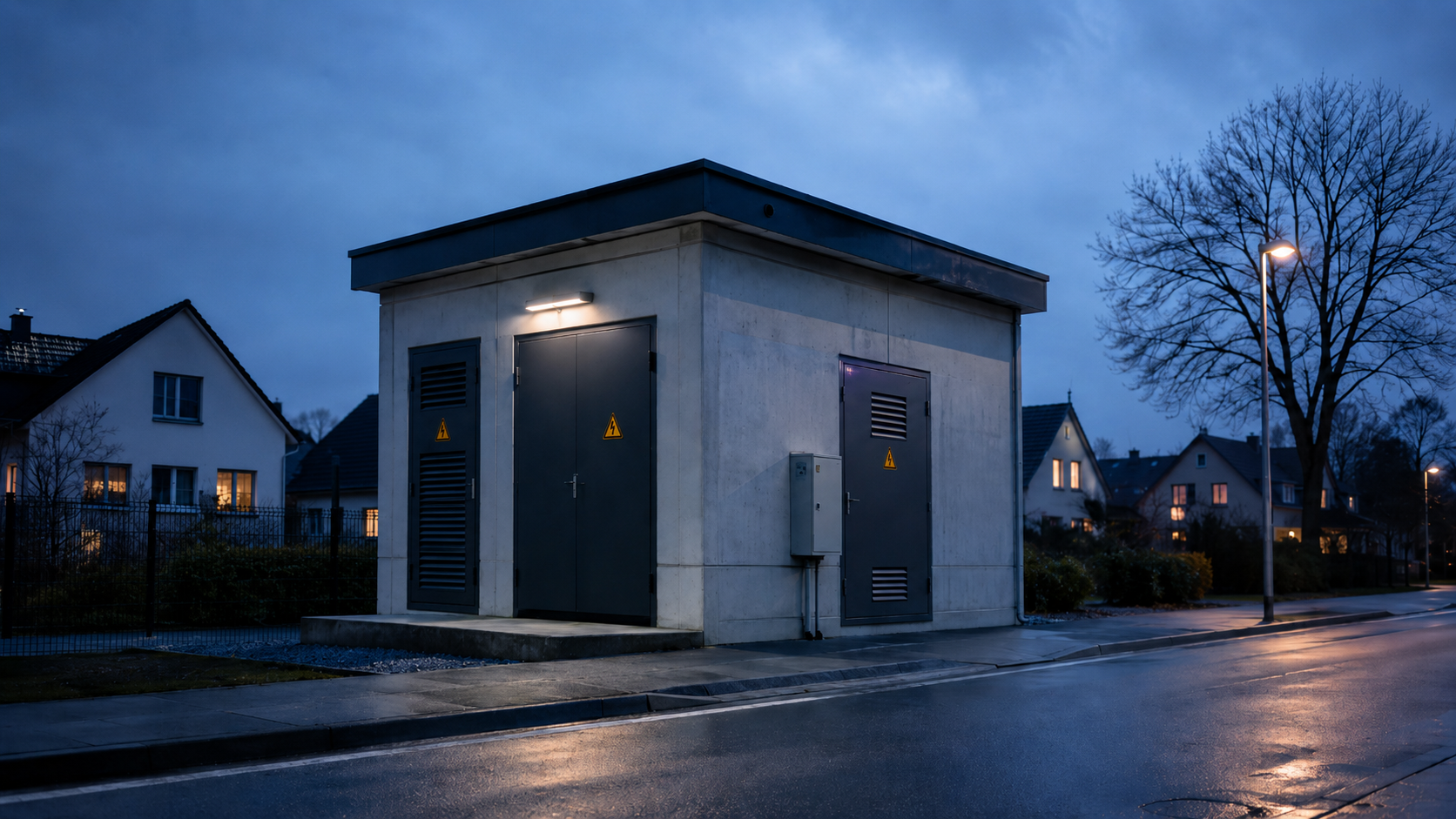
Energieinfrastruktur als Einsatzbereich für Industrierouter und LTE-450 Router.

Technical Insight

  • Virtualised RTU functions to replace or complement physical RTUs
  • Direct sensor integration via available interfaces, depending on project requirements
  • Secure data transmission via IPsec, TLS, HTTPS, firewall functions and SSH
  • Multi-WAN capability (LTE/4G/5G, Ethernet/fibre, VPN) for communication redundancy
  • Watchdog for automatic connection recovery in case of disruptions
  • Syslog and SNMP support for integration into central control systems
  • IPv4/IPv6 support for modern network architectures
  • Continuous software and security updates to keep routers up to date and ensure long-term reliability
  • Compact form factor, isolation and extended temperature range for use in secondary substations and outdoor cabinets

Why Garderos

Scalable management:

With the Garderos Configuration Server (GCS), configurations, certificates, firmware and logging can be centrally managed – without on-site service, ideal for large networks.

Long-term investment security:

Product lifecycles of 15+ years and long-term availability reduce future replacement cycles.

Security architecture for critical infrastructure

VPN, IPsec/TLS, firewalling, support for industry-standard protocols and certificate-based authentication – designed to meet security and compliance requirements (e.g. NIS2).

High availability for blackout and fault scenarios

450 MHz, watchdogs, Multi-WAN and self-healing mechanisms ensure communication remains stable even under extreme conditions.

Proven for industrial use in secondary substations

Robust hardware with an extended temperature range, isolation and a compact form factor – ideal for confined outdoor cabinets and harsh environments.

Customised solutions

Garderos develops tailored interface combinations, software modules (e.g. protocol converters), edge containers and integrations into existing control systems.

Are you facing a similar challenge?

Let’s discuss your use case.

Talk to us

Our Clients

Logo Charge Here

Further Information

Which Garderos router series are best suited for this use case?
What software capabilities does Garderos provide?


Weitere Beiträge