


Contact

Power grids are becoming more digital, more distributed and more complex. At the same time, many Distribution Network Operators face shrinking operational teams, increasing cyber‑security risks and infrastructure that must run reliably for decades.

How can utilities manage thousands of substations, routers and field devices without increasing operational complexity?

This question is the focus of the latest episode of the “Powering the Future” podcast by Smart Grid Forums, featuring Paul Cullen, co‑founder of Garderos. In the conversation, he shares insights into how utilities can simplify grid communications while strengthening operational resilience and cyber security.

Key topics discussed in the podcast

In the episode, Garderos Co-founder Paul Cullen explains:

  • why zero‑touch provisioning is becoming essential for operating large fleets of routers across thousands of substations
  • how utilities can deploy and update thousands of devices remotely, reducing the need for on‑site engineering work
  • how edge computing on industrial routers enables applications to run directly at the grid edge
  • how a virtual RTU can replace additional hardware and significantly reduce cost, cabinet space and power consumption
  • why open‑source software is increasingly required in public tenders and how it improves transparency in critical infrastructure projects

The conversation also highlights how utilities can maintain consistent configurations and rapid security updates across large device fleets – an increasingly important capability as cyber threats evolve.

▶ Watch the full episode below:

You are currently viewing a placeholder content from Default. To access the actual content, click the button below. Please note that doing so will share data with third-party providers.

More Information

Meet Garderos at Smart Grid Technical Forum 2026 in Paris

Garderos will be exhibiting at the Smart Grid Technical Forum 2026 in Paris.

If you are attending the event, meet our team to discuss:

  • operational challenges in digitalised distribution grids
  • secure and scalable communication architectures for substations
  • practical approaches to managing large fleets of routers and field devices

We look forward to exchanging ideas with Distribution Network Operators and smart grid experts in Paris.

Find out more about our solutions for utilities here.

Podcast interview about zero-touch provisioning for smart grids with Garderos co-founder Paul Cullen

Weitere Beiträge

At a Glance:

  • Industrial routers connect distributed field devices with control and backend systems in traffic, tolling and EV charging infrastructure.
  • Multi-connectivity and centralised security support reliability, availability and scalable fleet management.
  • Garderos presents its industrial routers at Intertraffic 2026 (Stand 05.265).

Industrial Routers for Traffic and EV Charging Infrastructure

As traffic management systems, tolling networks and EV charging infrastructures continue to expand, communication requirements become increasingly complex. More distributed assets, parallel data streams and higher security expectations demand robust and scalable network architectures.

In this context, the industrial router plays a central role at the communication layer:

  • It connects distributed field devices with control systems and backend platforms.
  • It supports stable network operation under peak demand.
  • It applies security mechanisms and contributes to the protection of data flows across distributed environments.

For system integrators and operators, this means that connectivity must be designed as an architectural element — not as an afterthought.

Communication Requirements in Modern Infrastructure

Traffic management systems integrate signal controllers, roadside units, cameras and sensor networks. Tolling and enforcement infrastructures depend on reliable data exchange between roadside equipment and central processing systems. Large-scale EV charging deployments require secure and highly reliable IP-based connectivity between charging points, load management systems and cloud platforms.

Although these applications differ, they share common characteristics:

  • Geographically distributed installations
  • Harsh environmental conditions
  • Long lifecycle expectations
  • Growing cybersecurity requirements
  • The need for centralised fleet management

An industrial router for traffic and EV charging infrastructure must therefore combine resilience, flexibility and lifecycle stability.

Multi-Connectivity and High Availability

Modern deployments increasingly rely on multi-connectivity architectures. Combining 5G wireless, fibre interfaces and optional local connectivity options allows operators to design redundant communication paths.

The R-8500 series combines 5G wireless, optical Gigabit SFP interfaces and optional Wi-Fi 6 in a single hardened platform. Automated failover between fibre and cellular helps to maintain service continuity, while Digital I/O functionality enables operators to remotely reset equipment without costly site visits.

In distributed infrastructures, these mechanisms contribute directly to operational reliability.

Security Across the Device Lifecycle

With increasing regulatory requirements, security must be consistently implemented across all communication endpoints.

Garderos routers support centrally managed security policies across large device fleets. This structured approach helps operators align their infrastructure with regulatory frameworks such as NIS2 by enabling consistent configuration and policy enforcement over the entire device lifecycle.

For system integrators, this reduces complexity during deployment. For operators, it supports long-term maintainability and transparency in security management.

Designed for Harsh Environments and Long Lifecycles

Traffic cabinets, roadside installations and EV charging parks present demanding environmental conditions. Industrial routers deployed in these contexts must operate reliably across wide temperature ranges and under continuous load.

The R-8500 platform is built for harsh environments and even moving vehicles.

By combining rugged hardware design with centralised management capabilities, operators can scale deployments while maintaining operational control.

Intertraffic 2026: Discussing Architecture and Requirements

At Intertraffic 2026, Garderos will present its approach to resilient and secure communication architectures for traffic management, tolling and EV charging infrastructure.

Visit us at Stand 05.265 to discuss your project requirements, integration scenarios and long-term lifecycle strategies with our team.

Complimentary Ticket

We are happy to offer complimentary tickets. Please register via the Intertraffic registration page.

Industrial Routers for Traffic and EV Charging | symbolic picture

Garderos will present its LTE-450 routers and secure communication solutions for critical infrastructure at E-world energy & water 2026 (Hall 5, Booth 5M116). The focus is on reliable, highly available connectivity for energy utilities, grid operators and the scalable operation of EV charging infrastructure.

Modern communication architectures for critical infrastructure

At E-world 2026, Garderos demonstrates how modern communication architectures based on LTE-450 routers support energy utilities and grid operators in strengthening operational resilience and modernising existing network infrastructures. Garderos will showcase its LTE-450-capable routers, which are approved on the whitelist of network operator 450connect and designed for highly available operation in critical networks.

A further focus is the virtual RTU for low-voltage monitoring and protocol conversion in secondary substations. In specific scenarios, it can replace a physical RTU and support more flexible grid operation. Garderos will also present solutions for the migration from 4G to 5G RedCap and provide guidance on a topic that is already relevant today and will continue to gain importance in the coming years.

Router solutions for operational reliability and cyber security in EV charging infrastructure

In the area of EV charging infrastructure, Garderos’ communication architecture increases operational reliability while reducing management effort. Industrial routers and the central management system form the backbone of a scalable solution, supporting redundant connectivity options such as 5G/4G, LTE 450 and fibre, combined with integrated security mechanisms.

Garderos solutions help energy utilities, distribution system operators, and operators and providers of EV charging infrastructure meet regulatory requirements while reducing day-to-day operational effort. Support for eSIM, eUICC and remote SIM provisioning simplifies rollout and fleet management across large numbers of sites.

Detailed requirements and selection criteria for KRITIS-grade LTE 450 routers can be found in the Garderos Buyer’s Guide (in German).

To arrange a meeting at E-world, please contact us at sales@garderos.com.

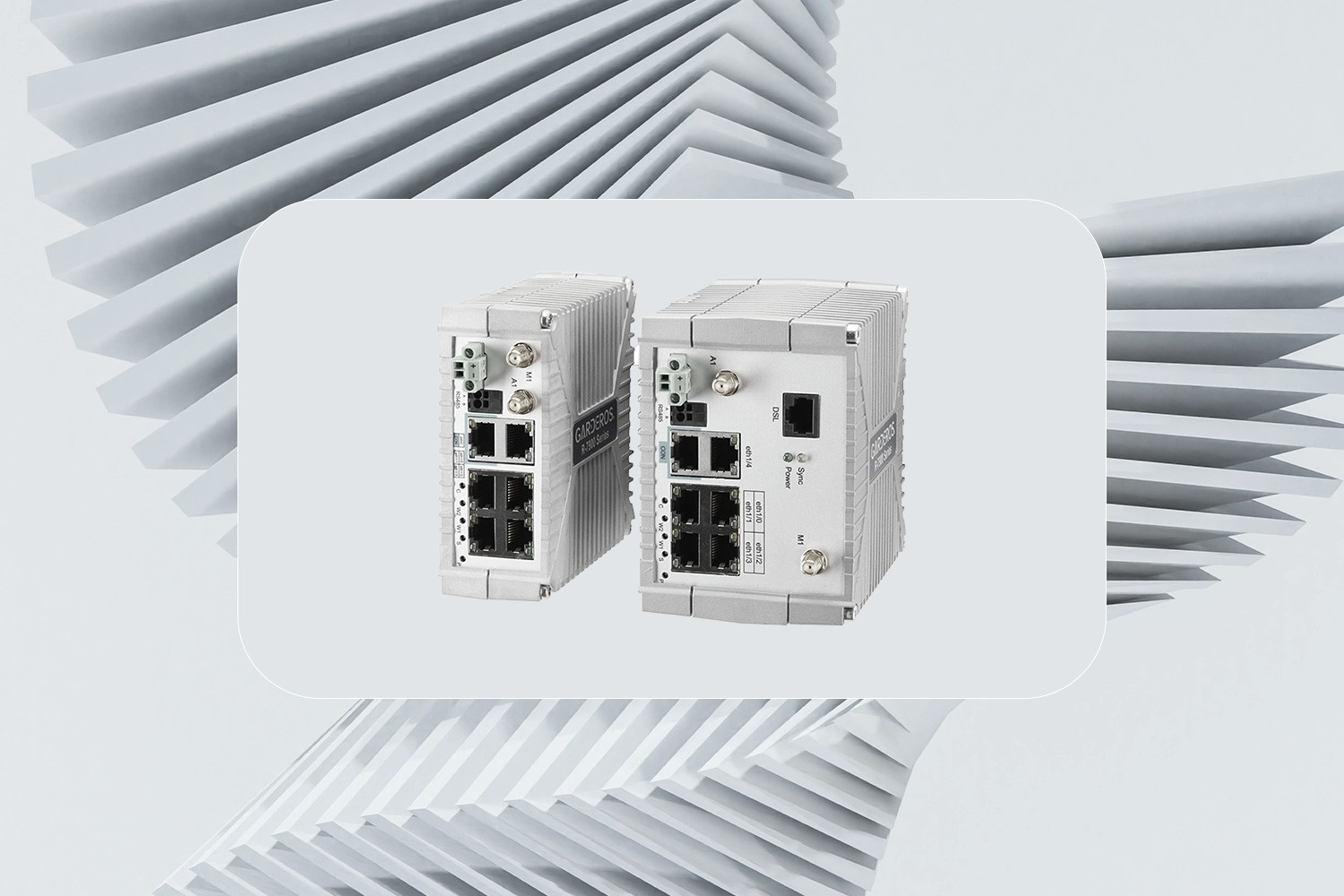
LTE-450 router from Garderos series 7900

The LTE-450 rollout by Bayernwerk Netz GmbH reaches even the most remote locations: on the Zugspitze, Germany’s highest mountain, a local substation was recently upgraded with cutting-edge technology for remote monitoring and control. The retrofit solution will allow real-time access to operating data and make it possible to track voltage and power values in the future.

At almost 3,000 meters, the Zugspitze substation is the highest power grid in Bayernwerk´s service area, supplying electricity to the Zugspitzbahn railway, the German Weather Service station and the Max Planck Society research facility, among others.

At the core of the retrofit installation is a rugged industrial router from Garderos, supporting both conventional public cellular and LTE-450 connectivity. This combination ensures secure and highly available data transmission – even under harsh alpine conditions.

Applications that Strengthen the Grid

  • Remote control technology: enabling real-time monitoring and management of grid assets
  • Power quality management: capturing and analyzing data on voltage and network stability
  • Future-ready design: The Zugspitze project showcases today’s digital ONS capabilities. Garderos routers also support advanced features such as virtual RTUs (vRTU) for upcoming use cases

Partnership for critical infrastructure

By choosing LTE-450 and Garderos’ router as well as router configuration server, Bayernwerk Netz ensures that even remote and exposed sites are seamlessly integrated into the digital power grid. This is a vital step toward greater resilience, security of supply, and transparency in energy networks.

As one of Germany’s largest utilities, Bayernwerk Netz is a long-standing customer of Garderos. Together, the two are driving the digitalization of the energy sector – from the lowlands all the way up to the highest peaks.

Photo: Christian Martens, Bayernwerk Netz GmbH

Team of four people from Bayernwerk stands at the top of Zugspitze, holding a retrofit box for the LTE-450 rollout